History
The origins of the guayabera are disputed. The most common story places it in Cuba, in the countryside around Sancti Spíritus and the Yayabo river, where farmers are said to have worn a loose shirt with large pockets for carrying their things, and perhaps guavas (guayabas), which may have given the shirt its name. Similar loose, pleated shirts were also worn in the Philippines, in Spain and in other parts of the Spanish empire, and these may have shaped it too.
From Cuba the guayabera spread to Mexico, especially to the Yucatán Peninsula, which had close trade links with Havana. Workshops in Mérida began to make it in large numbers in the twentieth century, and in Yucatán it is also called the camisa yucateca. Small towns such as Tekit, south of Mérida, live from making guayaberas and call themselves the “capital of the guayabera”.
Over the twentieth century the guayabera moved from a work shirt to smart menswear. Politicians, musicians and businessmen wore it, Mexican presidents wear it for official events in hot regions, and it became the standard formal shirt for hot weather from the Caribbean to Florida.
Features and styles
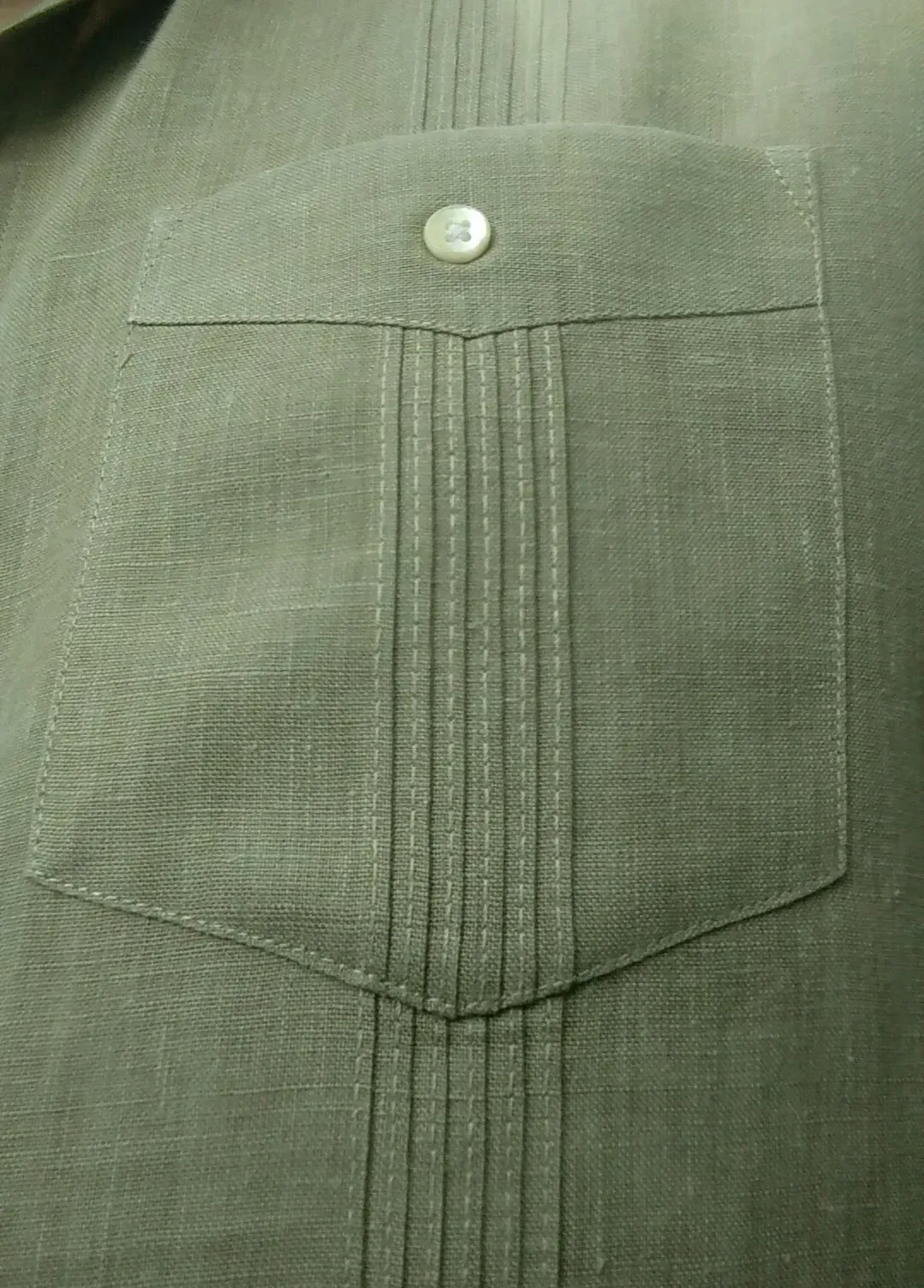
- Pleats (alforzas): two or more vertical rows of narrow, stitched pleats run down the front, and usually three down the back.
- Pockets: classically four patch pockets on the front, two on the chest and two at the hip, often with pointed flaps and buttons.
- Buttons: small buttons, often of mother-of-pearl, down the front placket and sometimes along the pleats and on the pockets.
- Hem: a straight hem with short side slits, meant to be worn outside the trousers.
- Fabrics: linen and cotton are traditional; cheaper guayaberas use cotton blends or polyester.
Guayaberas come with short or long sleeves. White and pale colours are the most classic, and the long-sleeved white guayabera is the most formal. Many Yucatecan guayaberas are decorated with embroidery, openwork or fine cross-stitch between the pleats.
How it is worn
A guayabera is always worn untucked, usually with plain trousers in white, beige or a dark colour. It replaces a jacket and tie, so in hot regions it is acceptable at the office, at weddings and at official events.
- Everyday: short-sleeved guayaberas in light colours, often in cotton.
- Formal: long-sleeved white guayaberas in linen, sometimes with French cuffs.
- With traditional dress: for the jarana in Yucatán, men wear a white guayabera or jacket-shirt with white trousers, a palm-fibre hat and sandals, next to women in the terno. On the Isthmus of Tehuantepec men wear a white guayabera at the velas, where women wear the Tehuana dress.
Where you see it today
In Yucatán and other hot regions of Mexico, the guayabera is still everyday wear for many men:
- Weddings: grooms and male guests often wear white guayaberas, especially at beach and Yucatecan weddings.
- Official and business events: politicians and officials wear it in hot climates, and it is accepted as formal dress in its place.
- Fiestas and dance: at vaquerías and town festivals in Yucatán, and in folklórico performances of the jarana.
The guayabera is also worn in Cuba, Puerto Rico, the Dominican Republic (where it is called the chacabana), Central America, Colombia, Venezuela and among Latino communities in the United States. To see it alongside the sarape and the charro suit, visit traditional clothing in Mexico.