History
A tehuana is a woman from Tehuantepec, and the name is used for the Zapotec women of the whole Isthmus of Tehuantepec, the narrow strip of land between the Gulf of Mexico and the Pacific in the state of Oaxaca. Their dress grew out of the indigenous huipil and wrapped skirt worn in the region before and after the Spanish conquest.
The isthmus has long been a crossroads of trade, and the dress took in materials and ideas that arrived along those routes: velvet, satin, lace and silk thread, and large floral embroidery that is often linked to imported embroidered shawls. Over the nineteenth century these came together into the dress known today, with a short huipil, a long skirt of the same fabric and a white ruffle at the hem. Gold jewellery became part of the festive outfit and is also kept as family savings, reflecting the strong role of Zapotec women in the markets of the region.
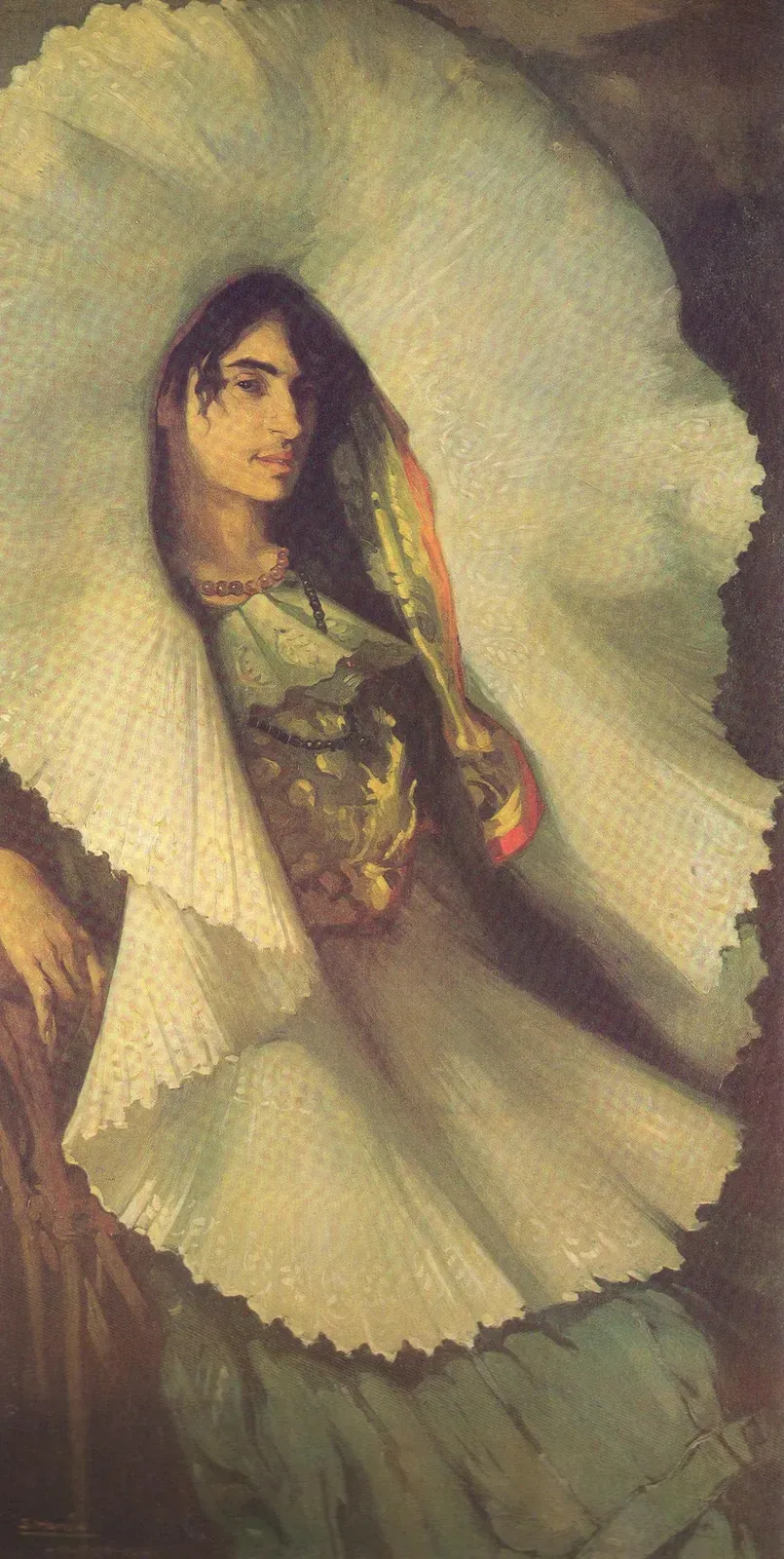
In the early twentieth century artists and photographers were drawn to the Isthmus, and the Tehuana appeared in paintings such as the one above and in the murals of Diego Rivera. The painter Frida Kahlo, who was not from the Isthmus, often wore the dress and painted herself in it, as in her Self-Portrait as a Tehuana (1943), and made it known around the world.
The parts of the dress
- Huipil: a short, boxy blouse that ends at the waist. For festivals it is made of velvet or satin and densely embroidered with large flowers in bright silk thread. Everyday huipils are made of cotton with simpler or machine-stitched decoration.
- Enagua: a long, full skirt, usually made of the same fabric as the huipil and embroidered to match.
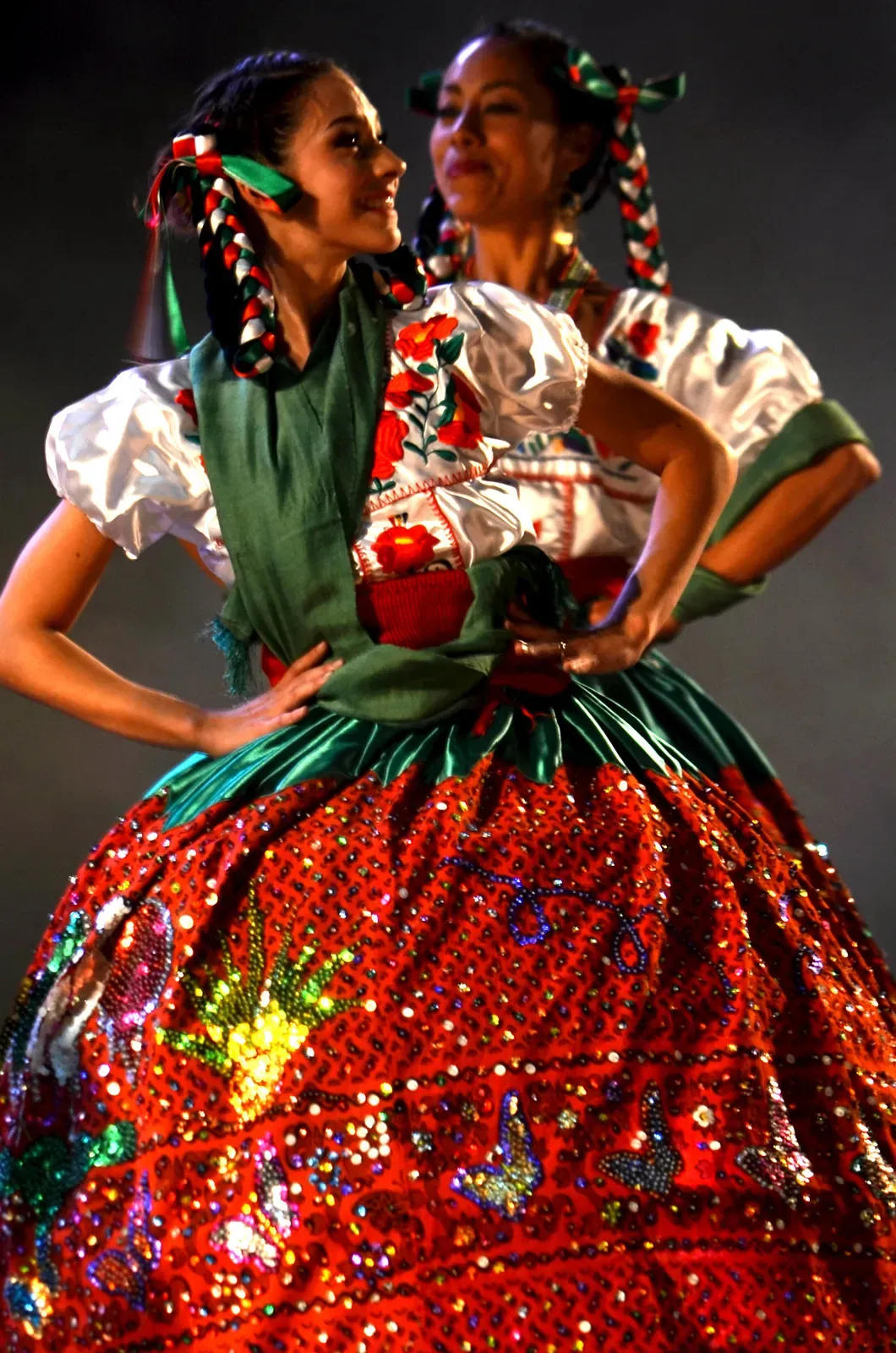
- Holán: a wide band of white pleated and starched lace or cotton sewn to the hem of the skirt, which swings when the wearer walks or dances.
- Huipil grande: a white lace garment shaped like a small huipil with sleeves. It is worn on the head so that the lace frames the face like a halo, or with the lace falling over the back, for church and the most formal occasions. It is also called huipil de cabeza.
How it is worn
The skirt is put on first, with the white holán at the hem, and the huipil is worn loose over the waistband. For festivals the outfit is completed with:
- Gold jewellery: necklaces of gold coins, chains, brooches and large earrings, often handed down in the family.
- Hair: braided or gathered and decorated with ribbons and fresh flowers.
- Headdress: the huipil grande, worn for religious ceremonies and the most important fiestas.
At fiestas men usually wear a white guayabera, dark trousers, a palm-fibre sombrero and a red bandana (paliacate).
Where you see it today
On the Isthmus, many women wear an everyday version of the huipil and skirt, and the full gala dress is kept for special occasions:
- Velas: the large fiestas of Juchitán, Tehuantepec and other towns, held especially in May. Women come in their finest velvet huipils, skirts and gold jewellery and dance late into the night.
- Guelaguetza: at Oaxaca’s July festival, dancers from the Isthmus perform La Sandunga, the region’s best-known dance, in Tehuana dress.
- Weddings and celebrations: brides, quinceañeras and their guests often wear the dress, and families commission new embroidered outfits for these occasions.
Tehuana-style embroidery is also popular in Mexican fashion, and embroiderers from the Isthmus have called for their designs to be credited when brands use them. To see the Tehuana dress alongside the huipil, rebozo and Yucatecan terno, visit traditional clothing in Mexico.