History
The terno grew out of the hipil, the loose white cotton tunic of Maya women on the Yucatán Peninsula. Colonial accounts say that after the Spanish conquest, friars pressed Maya women in Yucatán to cover their upper bodies with this tunic, which was already worn elsewhere in Mesoamerica. Over the colonial period the hipil came to be worn over a long underskirt, the fustán (pik in Yucatec Maya), and European influences such as lace, finer cloth and floral motifs found their way into the dress.
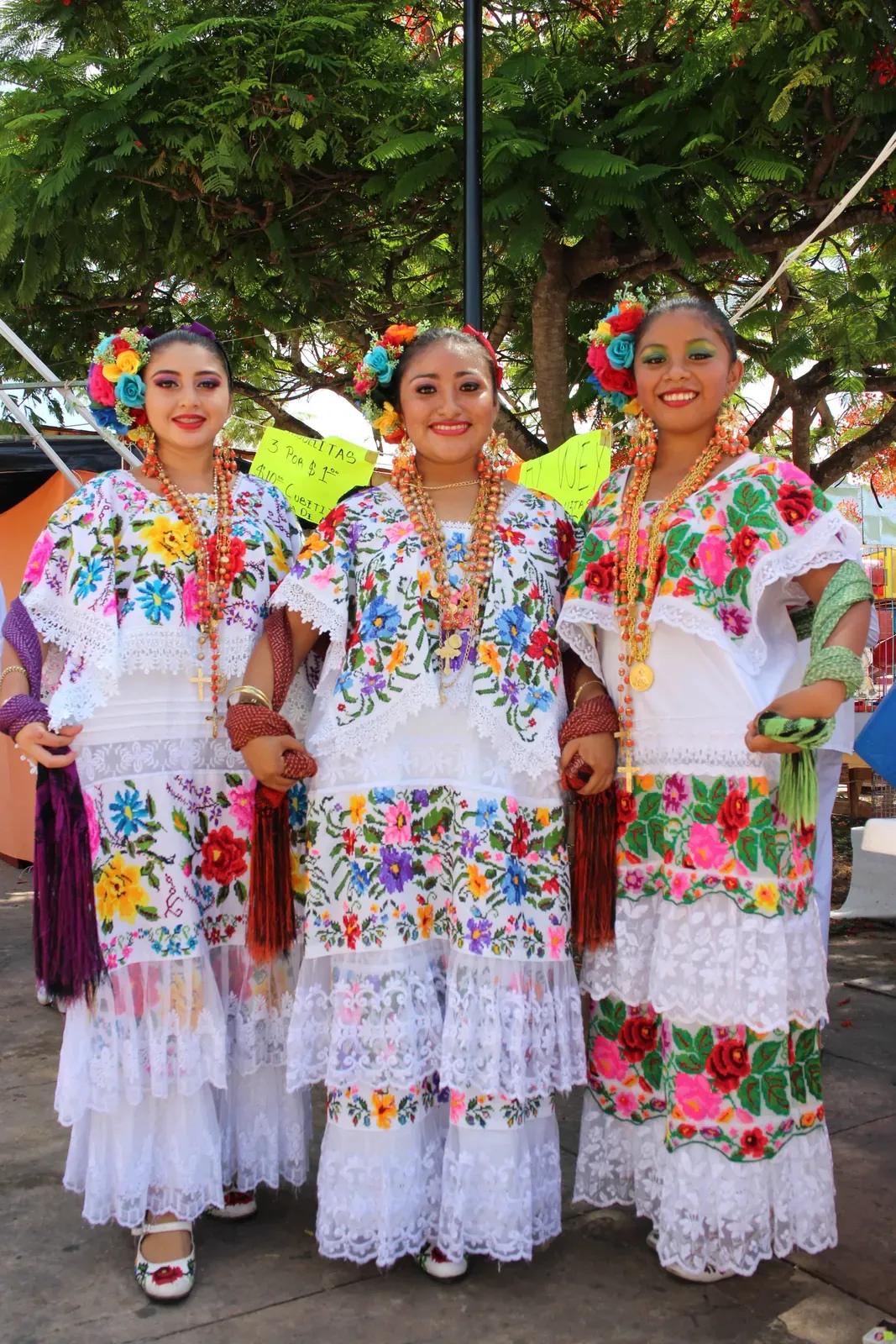
The festive version, worn for fiestas, vaquerías and weddings, added a third piece: the jubón, a separate embroidered yoke worn over the hipil. The Spanish word terno means “a set of three”, and the name describes these three garments worn together. In Yucatán, women who wear the hipil and terno are commonly called mestizas, a local term tied to this way of dressing.
Today the terno is regarded as the representative dress of the Yucatán Peninsula. It is the costume of the jarana, Yucatán’s regional dance, and many families keep ternos for weddings and other special occasions.
The three pieces
- Fustán: a long white underskirt that reaches the feet. It is gathered at the waist, and its lower part, which shows below the hipil, is decorated with lace and often with embroidery.
- Hipil: a white dress with a square neckline that falls to about mid-calf over the fustán. Its hem carries a broad band of colourful embroidery.
- Jubón: a square-necked yoke that is worn over the hipil, covering the shoulders and upper chest. It is the most elaborate piece, densely embroidered and edged with lace.
The embroidery is usually floral, with roses and other flowers in bright colours on a white ground. The best-known technique is counted cross-stitch, called xokbil chuuy in Yucatec Maya and hilo contado in Spanish. Hand-embroidered ternos can take months to make, and machine-embroidered versions are also widely worn.
How it is worn
The fustán goes on first, then the hipil over it, and finally the jubón around the neck and shoulders, so that the embroidered bands of all three pieces line up from the shoulders to the hem.
A terno is rarely worn on its own. It is usually completed with:
- Jewellery: a long rosary of gold filigree and coral beads with a cross or medallion, gold chains and filigree earrings.
- A rebozo: a fine shawl, draped over the shoulders or held in the hands during the dance.
- Hair: pulled back into a bun and decorated with ribbons and a crown of flowers.
- Shoes: white heeled shoes, often embroidered to match the dress, which suit the footwork of the jarana.
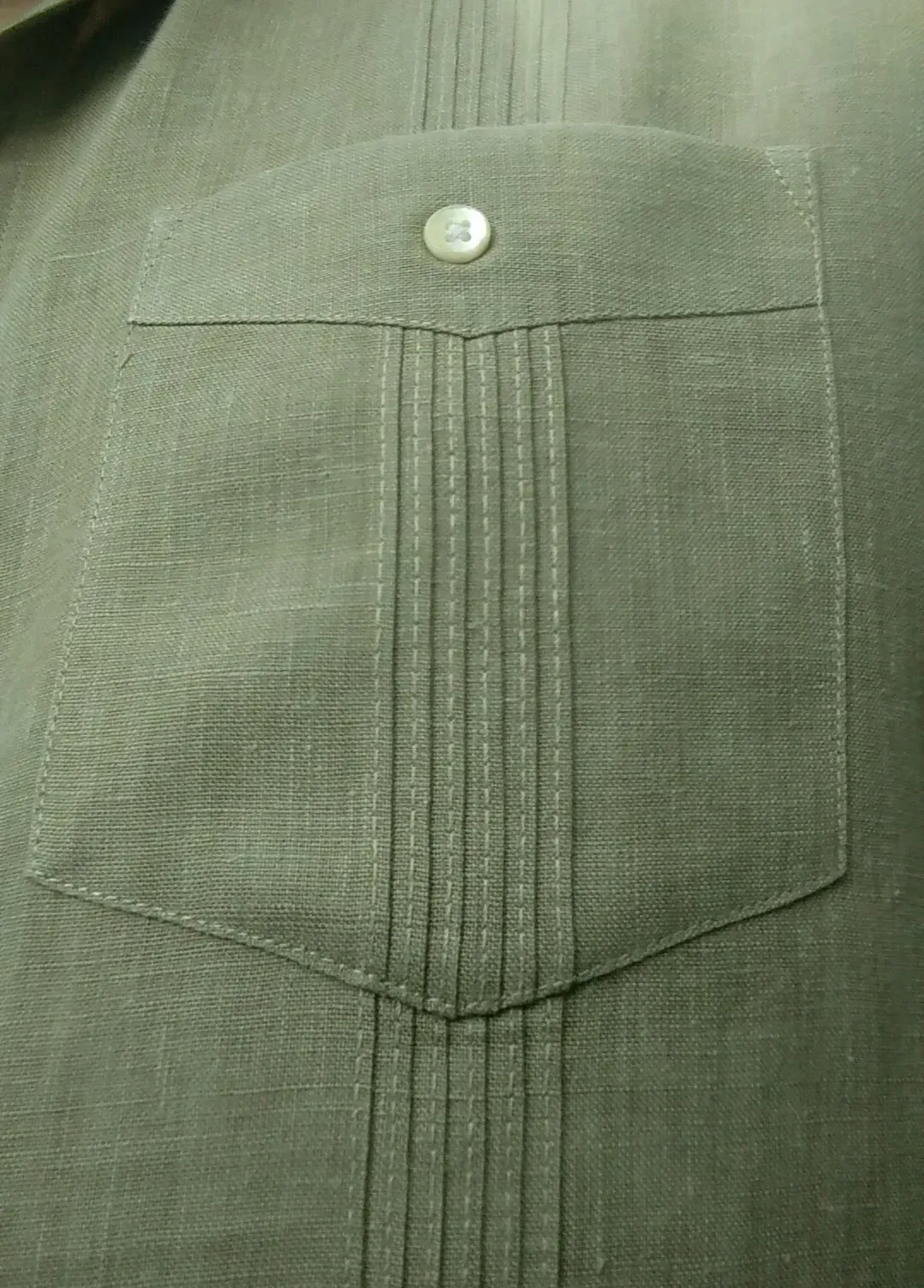
Men dancing the jarana usually wear white: a guayabera or a white jacket-shirt, white trousers, a palm-fibre hat and sandals.
Where you see it today
The everyday hipil is still worn in many towns and villages of Yucatán, Campeche and Quintana Roo. The full terno is kept for special occasions:
- Vaquerías: village fiestas that began as celebrations of cattle branding and are now often held as part of patron saint festivals. Couples dance the jarana late into the night, the women in ternos.
- Jarana performances: in Mérida and other towns, dance groups perform the jarana in public squares for local audiences and visitors.
- Weddings and celebrations: some Yucatecan brides wear a white or gold-embroidered terno, and ternos are worn at quinceañeras, anniversaries and town festivals.
To see how the terno fits into Mexico’s wider dress traditions, alongside the huipil, rebozo and sarape, visit traditional clothing in Mexico.