History
The rebozo took shape in New Spain during the colonial period, and its exact origins are debated. It is usually described as a blend of several traditions: the cloths and shawls that indigenous women wore and used for carrying before the Spanish conquest, the Spanish mantilla and shawl, and Asian textiles that reached Mexico on the Manila galleons from the Philippines. Its name comes from the Spanish rebozar, “to cover the face”.
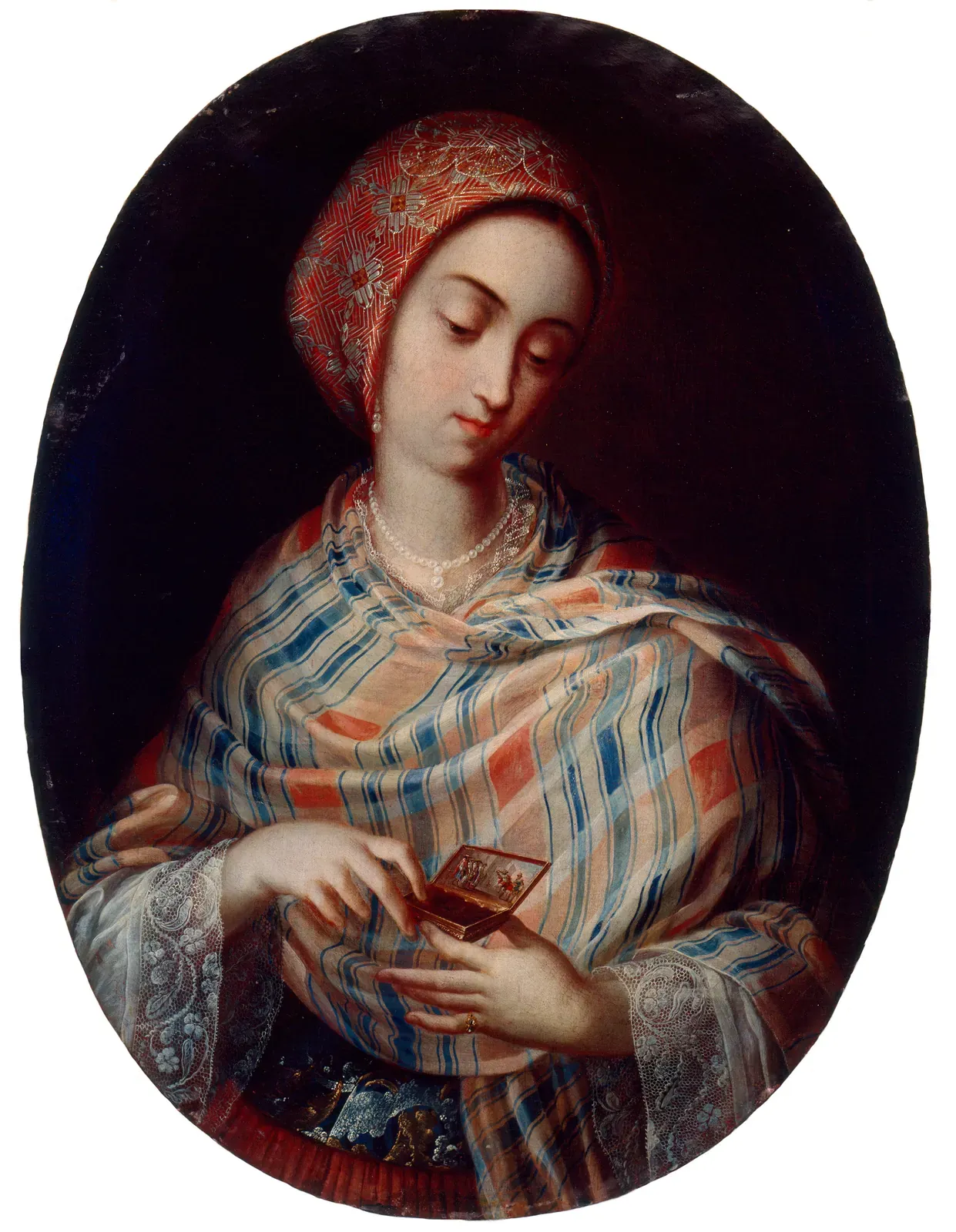
By the eighteenth century the rebozo was worn by women of every social group, from indigenous and mestiza women in plain cotton to wealthy women in fine silk, sometimes embroidered or woven with silver and gold thread. Paintings from New Spain, like the portrait above, often show women wrapped in striped or ikat-patterned rebozos.
After independence the rebozo became a symbol of Mexico. During the Mexican Revolution, the women who followed and fought with the armies, the soldaderas or adelitas, are often pictured wearing one, and in the twentieth century artists such as Frida Kahlo wore and painted rebozos as part of a proud Mexican identity.
Main styles
- Ikat rebozo (jaspe): the threads are tied and dyed before weaving, so the pattern appears slightly blurred in the finished cloth. This is the most typical rebozo technique.
- Tenancingo (State of Mexico): one of the main weaving towns, known for cotton and rayon ikat rebozos in many colours, made on backstrap and treadle looms.
- Santa María del Río (San Luis Potosí): famous for very fine silk rebozos with intricate ikat patterns and elaborate fringes.
- Indigenous rebozos: in many communities women weave their own plainer rebozos in cotton or wool, such as the dark blue rebozos with fine stripes worn in Purépecha villages in Michoacán.
The fringe, called rapacejo, is knotted by hand from the loose warp threads, often by specialised knotters (empuntadoras). On a fine rebozo the knotting can form lace-like patterns and take as long as the weaving itself.
How it is worn
A rebozo is a long, narrow cloth, so it can be worn and used in many ways:
- Over the shoulders: draped around the shoulders with the ends hanging in front or crossed over the chest, as part of the china poblana outfit and many festive costumes.
- Over the head: pulled over the head for warmth, against the sun or to cover the head in church.
- For carrying: tied across the body as a sling to carry a baby on the back or hip, or to carry firewood, food and goods from the market.
- In dance: held, swirled and wrapped in folklórico dances from several regions.
Midwives in Mexico also use the rebozo in traditional practices during pregnancy and birth, and these techniques are now taught to midwives and doulas in other countries.
Where you see it today
In many rural and indigenous communities the rebozo is still part of everyday dress. Elsewhere it is worn for festivals, weddings and national holidays, layered over a huipil, a Yucatecan terno or a modern dress. Fine silk rebozos are kept as heirlooms and given as gifts, and in some regions a rebozo is part of the dress a woman is buried in.
Weaving towns hold rebozo fairs and the craft is taught in workshops. Designers also use the rebozo in modern fashion. To see the rebozo alongside the huipil, sarape and Tehuana dress, visit traditional clothing in Mexico.